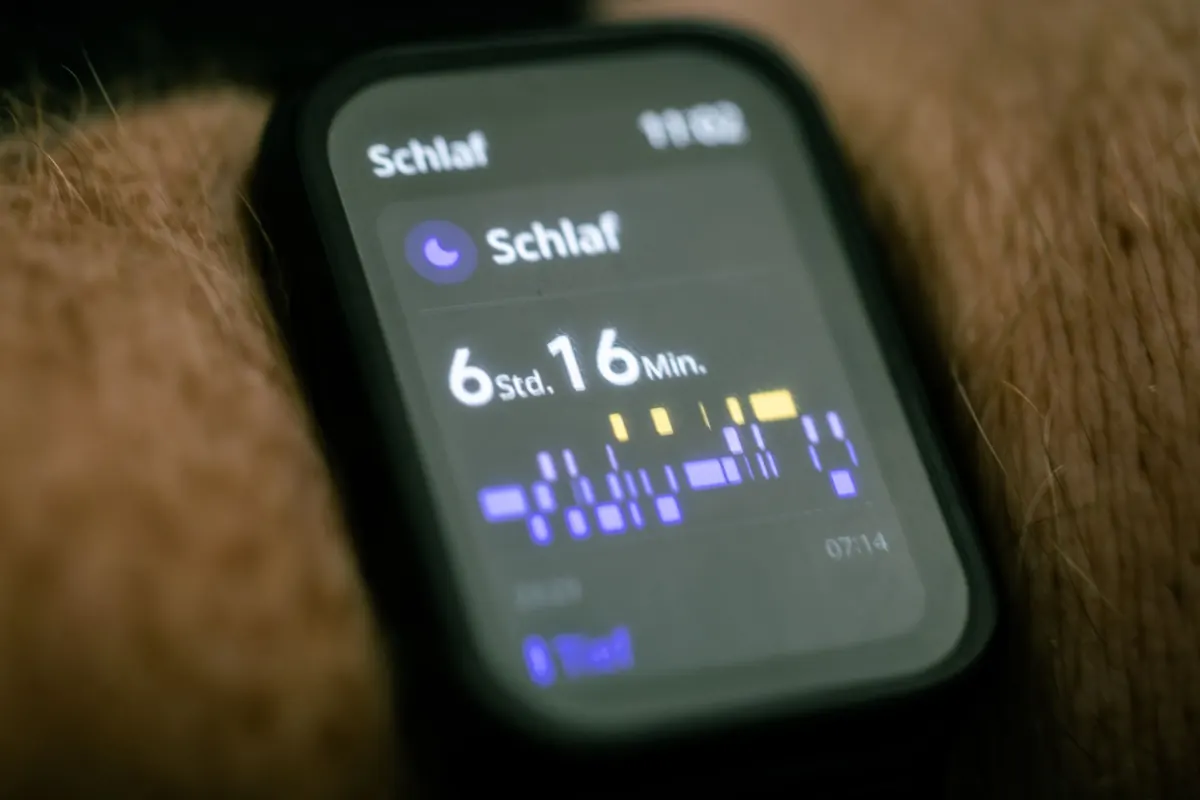
It is 6:40 a.m. You open the app before you are fully awake. Your overnight blood oxygen dipped to 88 percent, your sleep score is 54, and a "breathing disturbances" counter shows eleven events. By the time the coffee is ready, you have convinced yourself that something is seriously wrong with your lungs.
Then you go to work, feel normal, and forget about it until the next morning. This cycle — alarm, reassurance, alarm again — is one of the most common side effects of wearing a health tracker. The fix is not to stop looking at the data. It is to look at it differently: in patterns, over weeks, with a healthy skepticism about any single night.
Wrist-based oxygen sensors estimate how much light your blood absorbs at two wavelengths. That estimate is affected by how still you are, how well the sensor presses against your skin, how warm your hand is, how you are lying, and how much blood is reaching the tissue at that moment. Roll onto your arm at 2 a.m. and the reading can drop for reasons that have nothing to do with your breathing.
Sleep staging works the same way. Your tracker is not watching your brain; it reads heart rate, heart rate variability, and movement, then matches those signals to patterns that tend to accompany light sleep, deep sleep, and REM. That is useful for trends. It is not a lab study with electrodes on your scalp, and a bad night of scoring can come from a late meal, a glass of wine, a warm room, or a cat on your chest.
None of this means the sensor is useless. It means a single number carries a wide margin of error, and the noise is often bigger than the signal you are trying to see.
When a reading bothers you, run it through these first:
Your baseline is what your body does in a normal week — not your best night, not your worst. To find it, wear the device consistently, on the same wrist, snug but not tight, and give it a few weeks to learn your patterns. Wearable algorithms often need several nights of data before their outputs settle down, and your own habits vary more than you think.
Then stop looking at nightly numbers altogether. Check the seven-night average for oxygen and the weekly shape of your sleep instead. A steady range with occasional dips is a different picture from a week of consistent drops, and the weekly view separates the two instantly.
Add context while you are at it. A two-line note in your phone — "wine, late dinner" or "congested, sick" — turns a mystery into an explanation three weeks later.
Pick one moment, say Sunday morning, and make it the only time you look at trends. Ten minutes, once a week:
That last point matters more than it sounds. A tracker that says you slept badly while you feel rested is giving you a number, not a diagnosis.
Sleep scores compress a lot of guesswork into one figure, and the scale is proprietary — two apps can rate the same night differently. Treat the score as a rough index of whether your week was steady, not as a grade you have to improve. What trackers genuinely do well is show consistency: bedtime drift, total time in bed, and how much your schedule jumps around on weekends. Those are levers you can actually pull, and they tend to move sleep quality more than any gadget or supplement.
If the app is making you anxious at 6 a.m., it is not helping you sleep. Move the review to a scheduled slot and keep the phone out of the bedroom.
Some signs should not wait for a weekly review. Seek urgent medical care for shortness of breath, chest pain, confusion, blue lips or fingertips, or oxygen readings that stay low while you are sitting still and feel unwell. Repeated overnight dips paired with loud snoring, gasping, witnessed pauses in breathing, or heavy daytime sleepiness are worth raising with a clinician who can order proper testing.
Most consumer wearables are not cleared as medical devices, and even the ones that are cannot diagnose you. Bring your trend data to the appointment — a few weeks of averages is far more useful to a doctor than a screenshot of one bad night. Nothing here replaces advice from a qualified health professional.
Charge the device before bed so it does not die at 3 a.m. Wear it snug on the same wrist. Keep a steady bedtime, within half an hour or so. Write nothing down tonight. Tomorrow, do not open the app at all.
Then, once a week, look at the week. If a pattern shows up two or three weeks running and you feel different, act on it. If a single night looks ugly and you feel fine, let it go. The point of tracking is to notice what changes over time, not to give yourself a new reason to worry before breakfast.
Photo: Patrick / Pexels